Nobody expects a king to consult a witch. Yet there was Saul, the first monarch of Israel, standing in a dark cave at Endor, begging a medium to summon the prophet Samuel from the dead. That scene—desperate。illegal, utterly human—captures the man better than any battlefield victory. Saul was never a tyrant by nature. He was a farmer's son who got drafted by God and spent the rest of his life trying to keep a crown that never quite fit.His story begins with a search for donkeys. Samuel anointed him in secret, poured oil on his head, and told him he would become prince over Israel. Saul hid among the baggage when the public announcement came. That detail matters. A man who hides from power is either humble or terrified, and Saul was probably both. He won his first real battle against the Ammonites。rallied the tribes, and for a while, it worked. The people had their king. The Philistines had a problem.
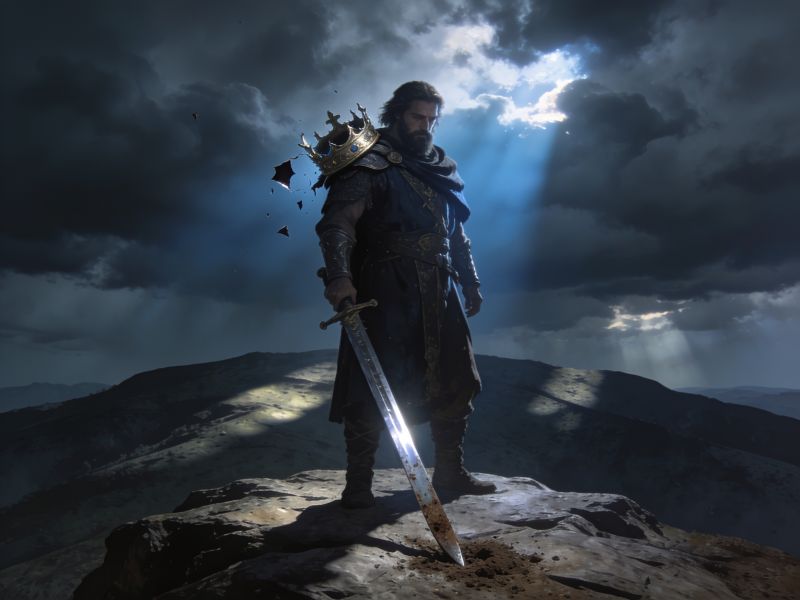
Then the cracks showed. Samuel told Saul to wait seven days at Gilgal for a sacrifice before facing the Philistines. Saul waited. The army melted away。the enemy pressed in, and on the seventh day, he offered the burnt offering himself. Samuel arrived moments later and asked what he had done. Saul's excuse was practical: the people were scattering, the Philistines were gathering. Pragmatism is not a defense in a theocracy. That offering cost him a dynasty. I often wonder if Saul slept that night replaying the scene, the smoke rising, Samuel's cold stare.Another failure followed at Amalek. God commanded total destruction, but Saul spared King Agag and the best sheep and cattle. Samuel's verdict was brutal: "To obey is better than sacrifice." Saul grabbed Samuel's robe, and it tore—a symbol, the prophet said, of the kingdom being torn from him. From that point, Saul's reign became a slow unraveling. He threw a spear at David twice. He slaughtered the priests of Nob for helping David. He chased the future king through the wilderness of Ziph while David had the chance to kill him in a cave and didn't. Saul wept when he heard that. "You are more righteous than I," he told David. The words were true。and they must have tasted like ash.His end came on Mount Gilboa. The Philistines overwhelmed Israel, and Saul's sons died before his eyes. Wounded by archers, Saul asked his armor-bearer to run him through. The man refused。so Saul fell on his own sword. David, who had every reason to celebrate, wrote a lament: "How the mighty have fallen." That line sticks because Saul was mighty, and he did fall—not from lack of courage, but from lack of trust. He was a king, a father, a man who started with donkeys and ended with a sword. Saul's failure wasn't about a witch or a spear;it was about a heart that kept trying to hold everything together without God. You can read his story as a tragedy or a warning. Either way, it's hard to forget a king who hid among the baggage and died on a hill, still wearing his crown.