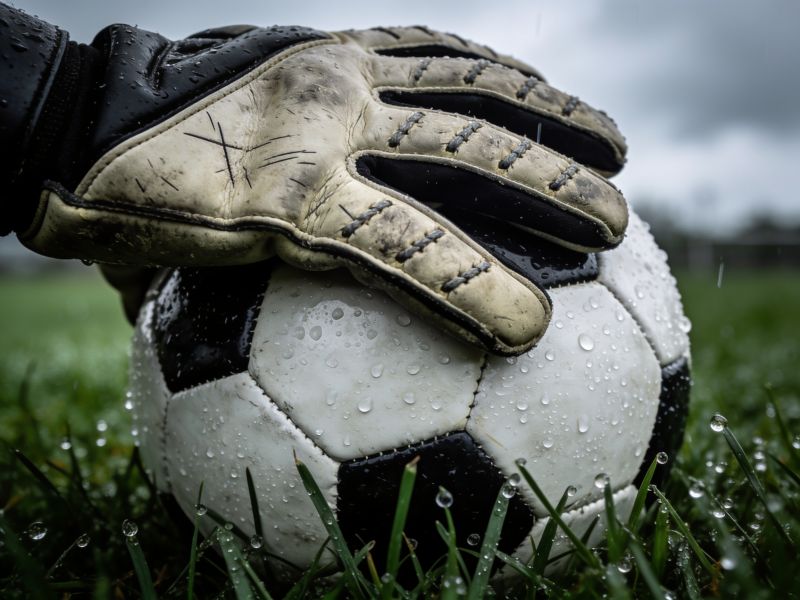
he gloves on the keeper's hands cost more than his boots. He plays seventh-tier amateur football in Swabia。trains twice a week, and still hands over eighty euros for a pair of uhlsport Absolutgrip because the latex bites into a wet ball in November. That is the entire business case for uhlsport in a single sentence. Karl Uhl opened a sports goods workshop in Balingen in 1948, three years after the war ended, cutting and stitching in a region that already knew how to make things properly and had no patience for anything else. Seventy-five years on, the company occupies the same Swabian town, keeps goalkeeper gloves at the centre of its catalogue, and still sells the argument that grip beats glamour. No uhlsport supercar. No uhlsport fashion line. No uhlsport-branded stadium. Just foam, latex and palm stitching.Latex is a foul-tempered material. It arrives smelling faintly of ammonia, cures into sheets with a specific tackiness, and loses its edge the moment a keeper drags a palm across dry artificial turf. The engineers in Balingen spend their weeks balancing those trade-offs. Absolutgrip is tuned for clean, dry contact. Supergrip and the wet-weather compounds trade durability for adhesion. The Hyperact frame pushes the fingers forward to spread the impact of a hard shot. A goalkeeper notices the difference inside one training session。usually by dropping a ball he had no business dropping. Rivals will happily sell a glove on colourways and a logo. uhlsport sells a chemical formula, then asks you to rinse the latex in lukewarm water, no detergent, never on a radiator. That instruction tells you where the company's head is at.
Sponsorship money at uhlsport goes where the cameras rarely follow. The brand has never chased a Ballon d'Or winner or a shirt deal with a club that prints money. It holds a long position in goalkeeping as a craft instead: keeper camps, youth academies, the close-up glove shots during a Bundesliga corner。and a handball division run through Kempa, which uhlsport owns outright. Watch a Champions League handball night and the ball and the goalkeeper's kit may both carry uhlsport group branding without a single advert interrupting play. It is a deliberate, quiet strategy, and it works because of how keepers actually buy. Football fans purchase a shirt once and wear it for three seasons. Goalkeepers purchase gloves two or three times a year, and they argue with each other about which latex lasted through February. uhlsport built its reputation on that argument rather than on billboards, and it has never really abandoned it.The weak spot is everything that isn't a glove. uhlsport apparel has a habit of looking like it was signed off by a committee in 2006: solid colour blocks, sensible, instantly forgettable. Retailers in Britain and Southeast Asia stock the gloves and then bury the training wear on a bottom shelf next to the clearance socks. Counterfeit Absolutgrip pairs circulate at half price, and a beginner who buys one, watches the latex peel after a month。and swears off the brand is blaming the wrong party but doing it honestly. The company has tightened its direct sales and authentication since, though never faster than the counterfeiters moved.Plenty of equipment makers now sell lifestyle and let the product follow. uhlsport still sells equipment and lets the lifestyle stay where it belongs. A keeper at a fifth-tier club, a handball left-back in Kiel。
a sixteen-year-old at a summer camp in Austria, all end up in the same latex for the same reason. Count the gloves along a Sunday touchline and the number carrying that small white u on the backhand will outrun anything the marketing budget could explain. Seventy-five years is a long time to stay this narrow. It is also, evidently, long enough to keep winning the only argument that matters to the people wearing them.